Support MS Research

Freedom from MS is in your hands.

Make a Donation

Sign Up to eNewsletter

Be the first to receive the latest news on MS Research.

Latest research worldwide that may benefit people with MS

Dr Elizabeth McDonald presents the latest research worldwide that may benefit people with MS (e.g. new treatments, stem cell therapies, genetics, etc.) and how Australian research is contributing to this.

Transcript of Presentation

MS Research covers so many areas. It covers the basic science and we are going to hear some of that tonight. It also covers clinical treatments and we will hear some more about that and also the impact of Multiple Sclerosis. It is a very dynamic area and it seems to be going at an absolutely exponential pace.
But there have been some major findings that have sign posted changes in direction in MS Research over the time and over the next few minutes I am going to highlight some of these for you. It won’t be all, so there will be bits left out but just because of time.

But I really want to showcase results from both National and International research that has changed our basic understanding of Multiple Sclerosis in the past year. The following speakers are all expert clinicians and researchers and they will provide you with first hand information about some of these important areas that I am going to cover and further highlight the diversity of MS research.

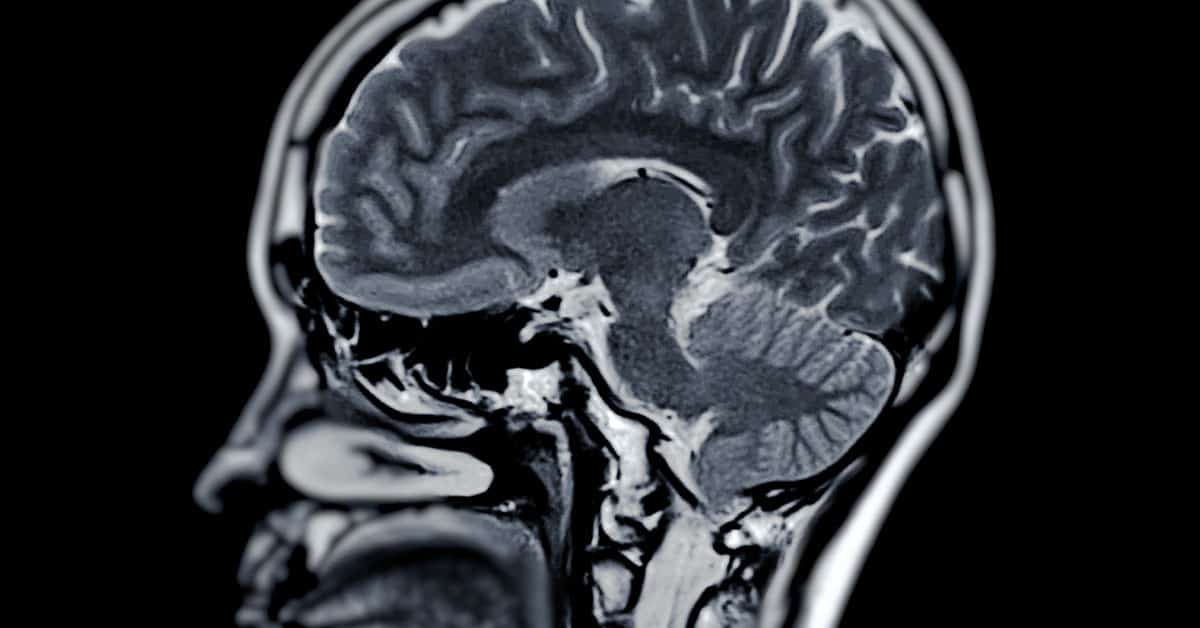
First off I thought, one of the things that has changed and really changed our understanding of Multiple Sclerosis has been in the area of technology. You might think that is a funny way to start but really there used to be the hot bath test for diagnosing Multiple Sclerosis. Now we have graduated to the MRI and I know in Melbourne the first MRI was in 1987 so that wasn’t that long ago.

The MRI has developed our understanding in MS. It has become used as a diagnostic tool. It has shown us that this is a much more dynamic disease than we ever thought. We used to think that people would just have episodes and then it would be quiescent. The MRI is changing all the time, so we have learnt a lot more about what is happening in the silent type of disease.

MRIs have also helped us to understand that this is a whole brain disease not just little areas but the whole brain can be affected. The outer covering which we call the Cortex and the inner white part. It has also been used as a marker of disease activity in clinical treatments but also in clinical trials. So the MRI has been a recent advance and it is certainly changing as the technology of the MRI improves with time.

In relation to Pathology, we have learnt more recently that the nerve fibre itself, The Axon breaks down early and this has lead to talk about neuro protection and neuro repair and that leads onto some Stem Cell therapy that we are going to hear about. When you used to go to MS meetings you never heard about protection. You never heard about repair. These are really new terms and it is because we understand more about the pathology of Multiple Sclerosis. What is actually happening.

There has also been a lot of work in the immune system. This has lead to the development of new therapies. Each new understanding of the immune system allows more opportunities to develop new therapies in a clinical setting.

We have the immune modulating drugs that have been around for a while but there is also Tysabri that’s developed which has a different mode of action and targets immune cells that would cross the blood brain barrier and into the brain itself. Now more recently we have the oral medications. All ongoing and many more medications are in the pipeline in a clinical research setting.

Then there is the environment and we are going to hear more about this and this is where Australia has really led the way. We know that there is a latitudinal gradient and that has shown us the importance of vitamin D and the ultraviolet radiation. There is also work going on looking at viral infections and perhaps what is the relationship of Epstein Barr Virus which causes Glandular Fever. That is work that is happening in Australia.

Also there are genetic factors and this is a blank slide because David is going to fill us in on this later.

In relation to social and applied research. There is the economics impact and the Australian MS study has shown us how expensive this disease is. Both in direct costs and indirect costs. We use this for advocacy. Trying to get a better deal for people with Multiple Sclerosis.

We have also learnt a lot about employment. The fact that people with MS leave employment earlier than other people with other chronic diseases. So it is important that we understand this and try and maintain people in the workforce. This year World MS Day is going to focus on employers last years it was on employees. People with Multiple Sclerosis within the workforce. Now it is how to maintain them by increasing their awareness of the employers.
Quality of life. We need to understand how MS affects quality of life so we can better help people manage the disease.

Of course there has been ongoing research into the various symptoms of Multiple Sclerosis and we are eagerly awaiting a new medication called Fampridine which hopefully will help the mobility of people with Multiple Sclerosis.

Now just to change track a little bit. In 2008 the International MS federation conducted a survey of research of its 42 member countries. Australia came in at the 6th highest country in regards to the amount of funding in dollar terms that went into research for Multiple Sclerosis. Which when you consider large population countries such as America and Canada, how small our population to come in 6th was fantastic. And certainly the research that is done here was similar to what was identified as key priorities by all these member countries.

I think this is due to, in no small way, the establishment of the MS Research Australia. As one neurologist and clinician but also a researcher, Trevor Kilpatrick says, ‘MS Research Australia has changed the landscape of MS Research in Australia’.  So by holding workshops and developing virtual institutions, helping researchers collaborate and communicate has really gone a long way to helping us get better research happening here for the money and hopefully will help us find the cure eventually.

So you can see in the red along here is where the funding was for Multiple Sclerosis before the establishment of MS Research Australia. Now that MS Research Australia is up and running there has certainly been a real escalation in the funding dedicated to research.

Various workshops have been held that has lead to the development of The Brain Bank, The Gene Bank, The Clinical Trials Network. There is a prevention study wanting to be undertaken and of course the social and applied MS Australia Longitudinal study and Dr Simmons is in the audience and he is the key person who runs this.

So I think Australian researchers they really kick well above their weight. I think we can be duly proud of the MS Research that happens in Australia and hopefully one day we can sail off into the sunset with all the answers and the cure for people with MS. Thank you.